

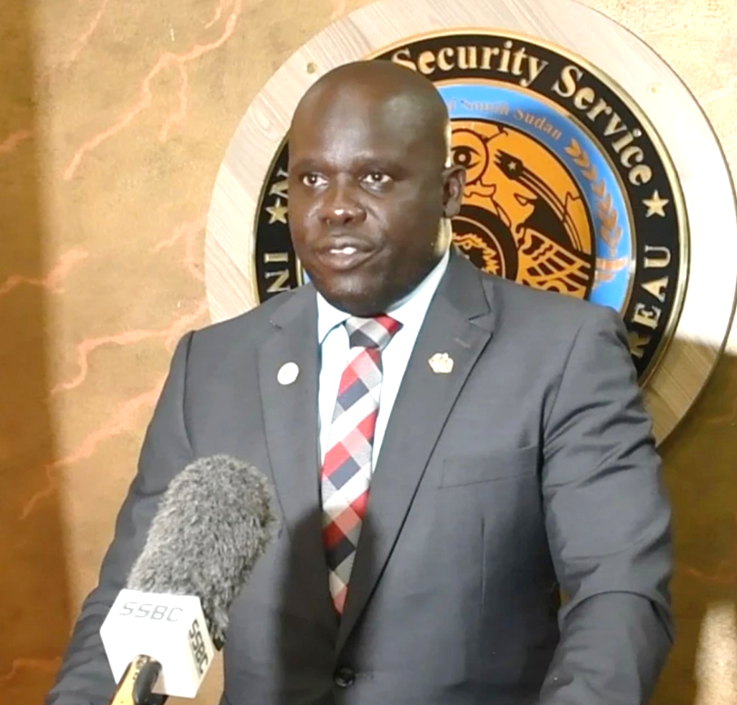
Director of Public Relations and spokesperson for the National Security Service/David John Kumuri, speaking to the media in Juba on June 9, 2026
By Awuou Michael Chol
The National Security Service (NSS) Internal Security Bureau has issued a stern warning to the public, businesses, tailors, and designers against the unauthorized manufacture, sale, possession, or wearing of official NSS uniforms and related insignia.
Speaking during a press briefing, the Director of Public Relations and NSS spokesperson John David Kumuri said the agency had observed an increase in illegal activities involving the production and distribution of security uniforms and accessories.
“It has come to our attention that some individuals and businesses are illegally manufacturing, selling, and wearing NSS uniforms and insignia,” Kumuri said.
According to the NSS, the practice poses a threat to public safety, national security, and the institution’s integrity.
Kumuri said the bureau strictly prohibits the unauthorized production of NSS uniforms, camouflage materials, and official dress codes without written approval from the security service.
He also warned against the sale, purchase, and distribution of NSS uniforms and related security equipment in markets and private shops.
“Civilians and unauthorized persons are not allowed to possess or wear NSS uniforms, tactical gear, or camouflage,” he stated.
The spokesperson noted that such actions are criminal offenses under the National Security Service Act 2024 and the South Sudan Penal Code Act 2008.
“Anyone found violating these directives will face arrest and prosecution,” Kumuri warned.
He added that offenders could face heavy fines and imprisonment under the law.
Kumuri urged members of the public to remain vigilant and report individuals or businesses involved in the illegal manufacture, sale, or use of National Security Service uniforms and related materials.
The warning comes as security authorities intensify efforts to prevent the misuse of official security attire and protect the credibility of state security institutions.
Leave a Reply